Posts

Showing posts with the label super moon

Rare Super Blue Moon to Illuminate the Night Sky on August 30, 2023: Uncover How This Celestial Event May Influence Your Life

Image
On the night of August 30, 2023, a rare celestial event will grace our skies - the Super Blue Moon. This phenomenon is a combination of two uncommon lunar traits: a supermoon and a blue moon. A supermoon occurs when the moon is at its closest distance to Earth, making it appear larger than usual. On the other hand, a blue moon is the second full moon in a single month. Despite its name, a blue moon has nothing to do with the color of the moon. This Super Blue Moon will rise just after sunset at 7:10 p.m. EDT (2310 GMT) on Wednesday from the eastern horizon. However, it will reach its peak brightness and size at 9:36 p.m. EDT when it is completely opposite the sun in the sky over Earth. It will then set on Thursday just before sunrise at around 6:46 a.m. EDT (1046 GMT). The Super Blue Moon of August 2023 is not only significant because of its rarity but also due to its brightness and size. Compared to normal full moons, super blue moons are 16% brighter and 14% bigger. This makes it one...
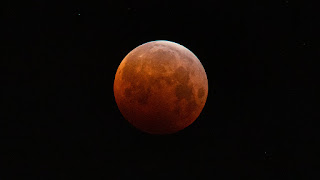
Super Flower Blood Moon 2021: Stunning 'Super Flower Blood Moon' rises with rare lunar eclipse

Image
Super Flower Blood Moon When a super flower blood moon takes to the skies the name itself captures a lot of attention.  Eyes to the skies on Wednesday as a rare celestial event took shape. First, a super moon which appears larger than a normal full moon that you can also see rising over ancient ruins in Greece.  As for the blood part, well that's because in some parts of the world including the Western US it coincided with the first total lunar eclipse in two years, turning the moon a dusty red and giving it another name the "blood moon." So not only do you have a super moon appearing about 7% bigger and up to 15% brighter than a typical full moon as the moon's orbit moves the closest to earth it will be this year at over 350,000 kilometers away.   But also as the earth moves between the sun and the moon its shawdow begins falling across the surface of the moon. The penumbra phase of the eclipse and the umbra is when the earth's entire shadow is cast. But not all ...